


 |
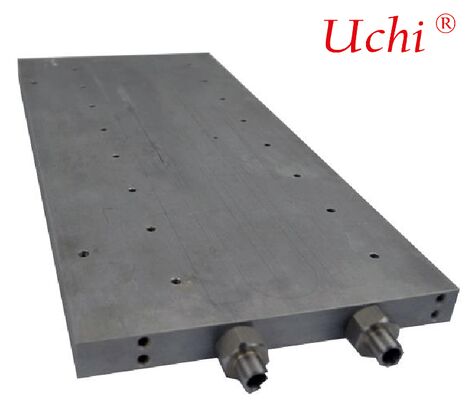
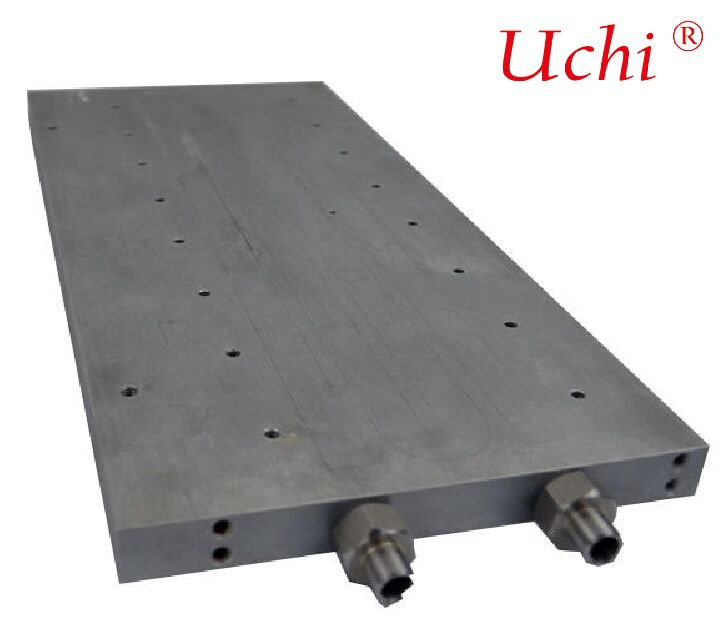
Intercambiador de calor de placa fría líquida soldada por vacío con anodizado duro
Datos del producto:
| Lugar de origen: | Dongguan, Guangdong, China |
| Nombre de la marca: | Uchi |
| Certificación: | SMC |
| Número de modelo: | Disipador de calor |
Pago y Envío Términos:
| Cantidad de orden mínima: | 100 piezas |
|---|---|
| Precio: | 1300-1500 dollars |
| Tiempo de entrega: | No limitado |
| Condiciones de pago: | T/T, Paypal, Western Union, |
| Capacidad de la fuente: | 50000000 unidades por mes |
|
Información detallada |
|||
| Dimensiones: | Personalizable (p. ej., 100 mm x 100 mm x 10 mm) | Líquido: | Agua o refrigerante adecuado |
|---|---|---|---|
| Servicio de procesamiento: | Mecanizado CNC + Soldadura por fricción-agitación | Cojinete: | Rodamiento de aleación |
| Peso del producto: | 0,38 kg | Presión máxima: | 5 bares |
| Forma: | cuadrado | Materiales: | cobre + aleación de aluminio |
| Característica: | Nueva tecnología y refrigeración de alta potencia. | corriente de entrada: | ≤12A |
| Capacidades materiales: | Aluminio, Cobre | Diámetro de salida: | 1/4 de pulgada o personalizable |
| Tecnología: | el CNC trabajó a máquina | ||
| Resaltar: | placa fría líquida soldada por vacío,intercambiador de calor con anodizado duro,Exchanger de calor con placa de enfriamiento líquido |
||
Descripción de producto
Exchanger de calor de placas frías líquidas con soldadura al vacío
Nombre de la marca: YY Thermal
Tamaño: Tamaño personalizado
Proceso: Bronceado al vacío
Material: AL6063
Forma: Cuadrado
Finalización:Anodizado duro
Control de calidad: ensayo al 100% antes del envío
Proceso adicional: Mecanizado CNC
Aplicación:Plata fría líquida
Certificado:ISO 9001:2015,ISO 14001:2015
Embalaje: cartón de discos ópticos, EPE, paleta de madera.
Placa fría líquida soldada al vacío
La placa fría líquida soldada al vacío es un componente de enfriamiento líquido de alto rendimiento fabricado mediante tecnología de soldadura al vacío.utilizado principalmente para la disipación de calor de alta eficiencia en equipos de alta densidad de potenciaMediante la circulación de refrigerante a través de canales internos sellados para eliminar directamente el calor de las fuentes de calor, se ha convertido en una solución convencional en la gestión térmica de gama alta gracias a sus principales ventajas:sin oxidación, alta tensión, baja deformación y excelente resistencia a la corrosión.
I. Principio y proceso básicos de fabricación
La soldadura al vacío es un proceso de soldadura realizado en unambiente de vacío (10−3~10−5 mbar):
-
ReunionesLa placa base debe apilarse con precisión con canales de flujo mecanizados, papel de soldadura (Al-Si, Cu-P, etc.) y placa de cubierta.
-
Calentamiento por vacíoColocar el conjunto en un horno al vacío, evacuar el aire y calentar hasta el punto de fusión del metal de relleno de soldadura (aproximadamente 577°C~600°C).que es inferior al punto de fusión del metal básico (aluminio/cobre).
-
Relleno de los capilaresEl relleno de soldadura fundida llena todos los huecos entre la placa base, la placa de cubierta y las aletas internas a través de la acción capilar.
-
Enlace metalúrgicoLa difusión atómica se produce entre el relleno de soldadura líquida y el metal básico; al enfriarse, forma uniones integradas de alta resistencia, alta conductividad térmica y completamente selladas.
-
Refrigeración y formaciónEl enfriamiento lento bajo vacío minimiza la tensión térmica y garantiza la deformación cero de la pieza de trabajo.
II. Opciones de materiales básicos
- Algodón de aluminio (6061/6063): más utilizado alta conductividad térmica, ligero, de bajo costo y fácil de mecanizar.
- El cobre (C1100/T2): Mejor rendimiento térmico, ideal para aplicaciones de flujo de calor ultra alto, como chips de IA e IGBT.
- Acero inoxidable / aleación de titanio: Se utiliza para entornos especiales duros que requieren una alta resistencia a la corrosión y a las temperaturas (industria aeroespacial, química).
III. Principales ventajas de rendimiento
- Ultralimpio y libre de oxidación: El ambiente de vacío elimina los riesgos de oxidación, residuos de flujo, porosidad y corrosión.
- Fuerte sellado y resistencia a la presión: Estructura monolítica con fugas cero; presión típica de 1 ‰ 10 MPa.
- Resistencia térmica extremadamente baja y alta eficiencia: Resistencia térmica de soldadura cercana a cero; en combinación con microcanales / aletas, la resistencia térmica puede alcanzar tan bajo como 0,02 °C·cm2/W.
- Estructura precisa y deformación mínima: El calentamiento global uniforme garantiza una gran planitud, adecuado para componentes electrónicos de precisión.
- Alta flexibilidad en el diseño: admite canales complejos, diseños de múltiples vías, microcanales (0,5 mm), aletas incrustadas, etc.
- Larga vida útil y alta fiabilidad: libre de corrosión y de aflojamiento; vida útil industrial superior a 10 años.
IV. Estructuras típicas de los canales de flujo interno
- Canal con ranuras de una sola capa: placa base con ranuras mecanizadas + placa de cubierta; estructura simple para potencia baja a media.
- Las aletas dobladas de offset / lucerna: Las aletas onduladas o dentadas incrustadas aumentan en gran medida el área de intercambio de calor y la turbulencia del fluido; preferido para IA y computación de alto rendimiento.
- Aves de las aves de corral: Las aletas se cortan integralmente de la placa base, eliminando la resistencia térmica de contacto para una conductividad térmica extremadamente alta.
- Estructura de los microcanales: canales a escala de 50-150 μm, flujo de calor > 350 W/cm2, ideal para módulos de potencia SiC/GaN.
V. Principales campos de aplicación
- Inteligencia artificial y centros de datos: Placas de refrigeración líquida para GPU (NVIDIA H100/H200, A100, etc.) y placas de refrigeración para servidores.
- Vehículos de nueva energía: Placas de frío de la batería de alimentación, unidades de control del motor (MCU), OBC y refrigeración IGBT.
- Almacenamiento de energía y electrónica de potencia: PCS, SVG, inversores fotovoltaicos, inversores de alto voltaje.
- Aeroespacial y Defensa: Refrigeración de alta fiabilidad para radar, equipos láser y cargas útiles de satélites.
- Medicina y láseres: Control de temperatura de precisión para tomografía computarizada, resonancia magnética y láseres de alta potencia.
VI. Levadura al vacío frente a otros procesos
| Propiedades | Solución de acero | Saldado por fricción (FSW) | Saldado TIG | Adhesivo / sellado mecánico |
|---|---|---|---|---|
| Rendimiento del sello | Excelente (cero fugas) | Es bueno. | El valor de las emisiones de gases de efecto invernadero es el valor de las emisiones de gases de efecto invernadero. | Pobreza (problemas de envejecimiento) |
| Estructura interna | Canales y aletas complejos | Canales simples | Canales simples | Canales simples |
| Resistencia térmica | Extremadamente bajo | Bajo | En alto. | Extremadamente alto |
| Resolución de temperatura/presión. | En alto. | Mediano | Bajo | Bajo |
| Calidad de la superficie | Brillante, sin oxidación | En promedio | Marcas de soldadura visibles | Los pobres. |
| El coste | Mediano alto | Mediano | Bajo | Bajo |
VII. Resumen
La placa fría líquida soldada al vacío representa el estándar de oro para la gestión térmica de alto rendimiento, equilibrando perfectamente la conductividad térmica, la resistencia estructural, la fiabilidad del sellado,y flexibilidad de diseño.

Quiere saber más detalles sobre este producto